Service Area · SW4Clapham
Clapham
Flooring Fitters.
South London · Fixed price · Free home visit · SW4 including Old Town & Abbeville Village
South London · Fixed price · Free home visit · SW4 including Old Town & Abbeville Village
Clapham's converted Victorian terraces are two jobs in one: upper-floor flats on chipboard needing acoustic underlay, ground floors where damp and ventilation need checking first. Floors and Fix supplies and fits carpet, LVT, laminate and engineered wood across SW4 and the neighbouring streets, assessing each level at a free home visit before fixing the price.
“Clapham Old Town's Georgian terraces were built in the 1770s and 1780s for professional families moving south from the City — the original 18th-century joists on Rectory Grove and The Polygon are still doing their job, some with the original deal boards intact beneath later floors.”Clapham Old Town conservation area · SW4
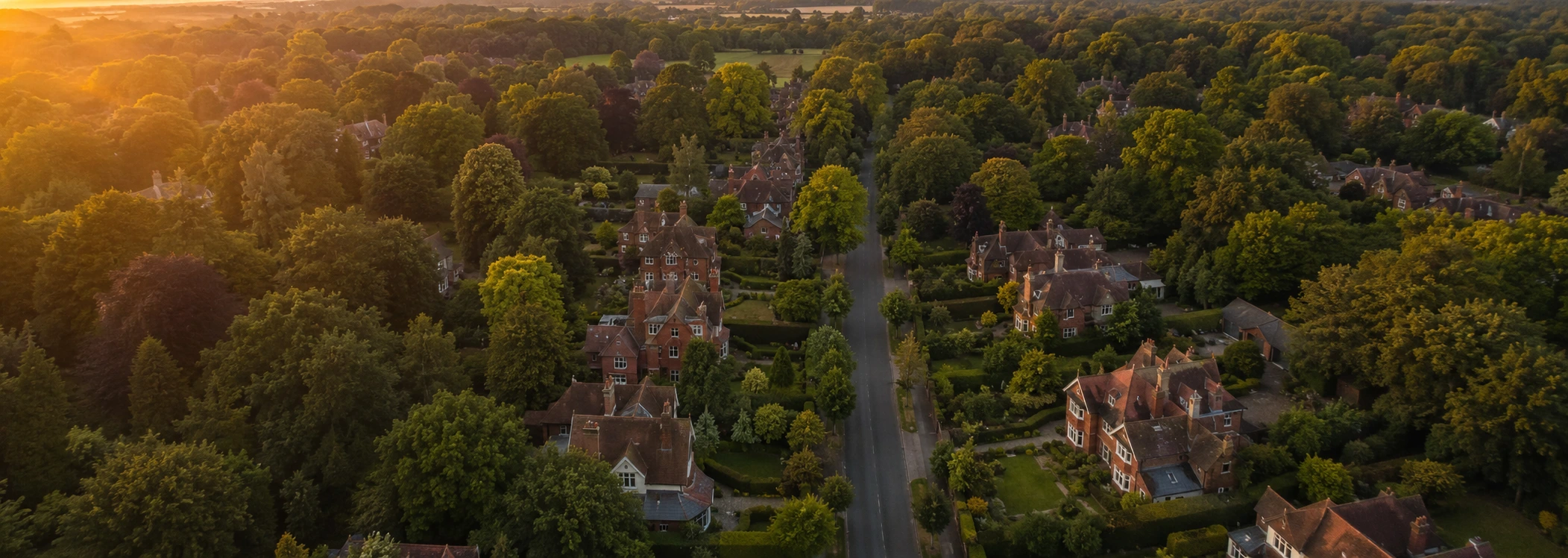
Clapham's SW4 postcode holds a remarkable four centuries of domestic building in a single south London neighbourhood: Georgian townhouses in the Old Town conservation area, late-Victorian semis in Abbeville Village, Edwardian terraces on Larkhall Rise, and 1920s and 1930s semis in Clapham Park — some with original block parquet still concealed in sitting rooms. Each era presents a different subfloor condition. We survey every home at the free home visit, confirm subfloor type and moisture levels before specifying any product, and price the complete job — materials, fitting, underlay, door bars, uplift, sub-floor prep — in a single fixed figure on the day.
Every type below is supplied, fitted and guaranteed by our in-house team. Tap a floor type for the full guide — costs, fitting times and real examples from Clapham homes.
Premium 80/20 twist carpet on a firm felt underlay for the tall-ceilinged upper floors of Abbeville Village’s 1875–1895 Victorian semis on Abbeville Road and Elms Road.
Full Clapham guide →Glue-down LVT for the converted ground-floor flats off Clapham North, where 1970s builders poured concrete over the original timber void — moisture-tested and levelled before fitting.
Full Clapham guide →Hard-wearing wood-effect laminate for hallways and family rooms across SW4, laid on a properly prepared and flattened base in Clapham Park and Larkhall Rise homes.
Full Clapham guide →Wide-board engineered oak in a brushed or oiled finish, suited to the generous Georgian proportions of Clapham Old Town reception rooms and the original parquet rooms of Clapham Park.
Full Clapham guide →The streets of Clapham Old Town — Rectory Grove, Old Town, The Polygon, Clapham Manor Street — were developed in the 1770s and 1780s for professional and merchant families relocating south from the City. These are among the oldest domestic properties in south London still in private residential use. The suspended timber ground floors sit on joists that in many cases have never been replaced: deep, well-seasoned members with a void depth that keeps them genuinely dry. Entrance halls in the better Rectory Grove properties retain original stone flag or York stone floors, occasionally with later Victorian encaustic tile overlays. We survey joist condition, void depth and flag stability on the free home visit. Where timber is sound, we ply and fit; where flags are in good condition we assess whether LVT in a large-format stone finish can be fitted directly — often it can, with self-levelling compound across any uneven joints. Wide-board engineered oak suits the generous Georgian proportions of the principal rooms.
The Abbeville Village area — Abbeville Road, Elms Road, Narbonne Avenue — was developed in the 1875–1895 period for middle-class owner-occupiers seeking larger houses than the standard south London terrace. The result was a run of semi-detached and larger terraced Victorian houses with ground-floor room spans of 4.5 metres or more. Original pitch pine boards of 150mm width are a regular find beneath carpet in these properties — well-seasoned, structurally sound and worth preserving as a substrate. Wide spans require careful ply preparation before any rigid product is fitted: we inspect every joist bay, re-fix loose boards throughout and install ply across the full floor area. Engineered oak in a wide plank format (190mm+) in a brushed or oiled finish is well-suited to the generous proportions of these reception rooms; for upper floors, a quality 80/20 twist carpet with a mid-weight felt underlay delivers comfort and sound absorption appropriate to Victorian ceiling heights.
Clapham Park — Poynders Road, Clarence Avenue, Kings Avenue, Atkins Road — was laid out between the wars as respectable semi-detached suburbia for clerical and professional families. The 1920s and early 1930s houses were built with solid suspended timber throughout and, in many front reception rooms, original block parquet in a herringbone or basket-weave pattern. Where the parquet survives in good condition — blocks firmly bonded, no hollow sections — we assess whether it can serve as a substrate for glue-down LVT or whether a ply overlay enables engineered oak to be laid over it. Where blocks are lifting or uneven we remove them, clean the screed and start fresh. In the ground-floor flats carved from larger Clapham Park houses during the 1970s, builders frequently poured concrete directly over the original suspended timber void — an imperfect solid base requiring moisture testing, DPM application and careful levelling before any product is specified.
The Victorian terraces on Larkhall Rise, Clapham Road and the streets running south from Clapham North tube were built in the 1870s–1890s as standard south London speculative housing: deal boards of 125mm width on joists at 400mm centres. Many of these streets were well-maintained and boards survive in reasonable condition. However, the concentration of flat conversions near Clapham North underground station introduces a specific complication: from the 1970s onwards, builders converting these houses into flats routinely poured concrete directly over the original suspended timber ground floors to create a solid base between dwelling units. The result — encountered regularly on Clapham Road, Landor Road and Thorncroft Street — is a concrete slab that may be uneven, may lack a proper damp-proof membrane and often tests positive for residual moisture. We take calibrated hygrometer readings at the free home visit, apply surface DPM where required, self-level as needed and specify glue-down LVT for reliable long-term performance on these ground floors.
Choose flooring in your own light at home in Clapham — we bring the samples, measure every room and give you the price on the spot. No deposit, no obligation.
Every Clapham quote includes materials, fitting, underlay, door bars and uplift of the old floor. The number we give you is the number you pay.
Anything that lifts, gaps or works loose within 12 months gets fixed free — we come back out to Clapham with no quibble and no call-out fee.
Floors & Fix Fitting Team did an excellent job from start to finish. The team was professional, punctual, and paid great attention to detail throughout the installation. The flooring was fitted to a very high standard, and the finished result has completely transformed the space. They kept everything tidy, communicated clearly, and made sure every aspect of the job was completed perfectly. I would highly recommend Jon and the team to anyone looking for quality flooring work and reliable service.
★★★★★Great and reliable service provided by Floors And Fix. Highly recommended
★★★★★I contacted the team at floors and fix, they came for a visit, showed me products and I paid a deposit. Within 10 days they and came fitted my flooring. I would strongly recommend!
★★★★★Supply and fit, Got a decent price and fitted on short notice
★★★★★Great service from the team at floors and FiX- supplied and fitted my carpets and floors
Yes — Clapham Old Town's Georgian terraces on Rectory Grove, Old Town and Clapham Manor Street are among our most common project types. These properties have suspended timber floors on 18th-century joists that are typically in excellent structural condition. We inspect the void, re-fix any loose boards, ply where needed and fit the product correctly for a listed or conservation-area home.
This is a common outcome of flat conversions in Clapham North and Larkhall Rise, where builders poured concrete over original timber voids in ground-floor flats. The concrete is often uneven and may lack a proper DPM. We test moisture, level any high spots with self-levelling compound and specify glue-down LVT for reliable performance on an imperfect solid base. It is durable, fully waterproof and looks excellent in period conversions.
The Abbeville Village semis and terraces — built between 1875 and 1895 — have generous suspended timber ground floors with room spans often reaching 4.5 metres. Original deal boards are frequently in good condition beneath old carpet. Wide-board engineered oak in a brushed or natural oiled finish works beautifully in these reception rooms; for the upper floors, a premium wool-blend or 80/20 twist carpet with a firm underlay suits the scale and character of the rooms.
The 1920s and 1930s semis on Clarence Avenue and Kings Avenue often have original parquet in the front reception room. Where the parquet is in good condition, we assess whether it can remain as a substrate for glue-down LVT — this is sometimes possible if the blocks are firm and level. Where the parquet is lifting or uneven, we remove it, ply the subfloor and fit a new product. We always assess on the free home visit before advising.
We can typically arrange a free home visit anywhere in SW4 within 2 to 5 working days. Evening and Saturday slots are available at no extra charge. We bring a full sample range — carpet, LVT, laminate and engineered wood — and give you a fully itemised fixed price on the day. No deposit is required.
See every sample at home in Clapham while we measure up — the full project is priced in one visit, with no obligation and no deposit.
Same-week visits available · enquire 24/7Last updated: June 2026