Service Area · W5–W13Ealing
Ealing
Flooring Fitters.
West London · Fixed price · Free home visit · W5–W13 including Pitshanger Lane & West Ealing
West London · Fixed price · Free home visit · W5–W13 including Pitshanger Lane & West Ealing
Edwardian semis near the Broadway, Victorian terraces in West and South Ealing, 1970s estate concrete and new station-side apartments: Ealing covers the full subfloor spectrum. Floors and Fix supplies and fits carpet, LVT, laminate and engineered wood across W5 to W13, with the right preparation chosen at a free home visit and the price fixed in writing.
“Pitshanger Lane's Edwardian villas were built when Ealing was marketing itself as the Queen of the Suburbs — the suspended timber subfloors beneath them reflect that aspiration, laid to a higher standard than contemporary terraced housing in neighbouring boroughs and still delivering on that promise over a century later.”W5 housing character · Pitshanger Lane conservation area
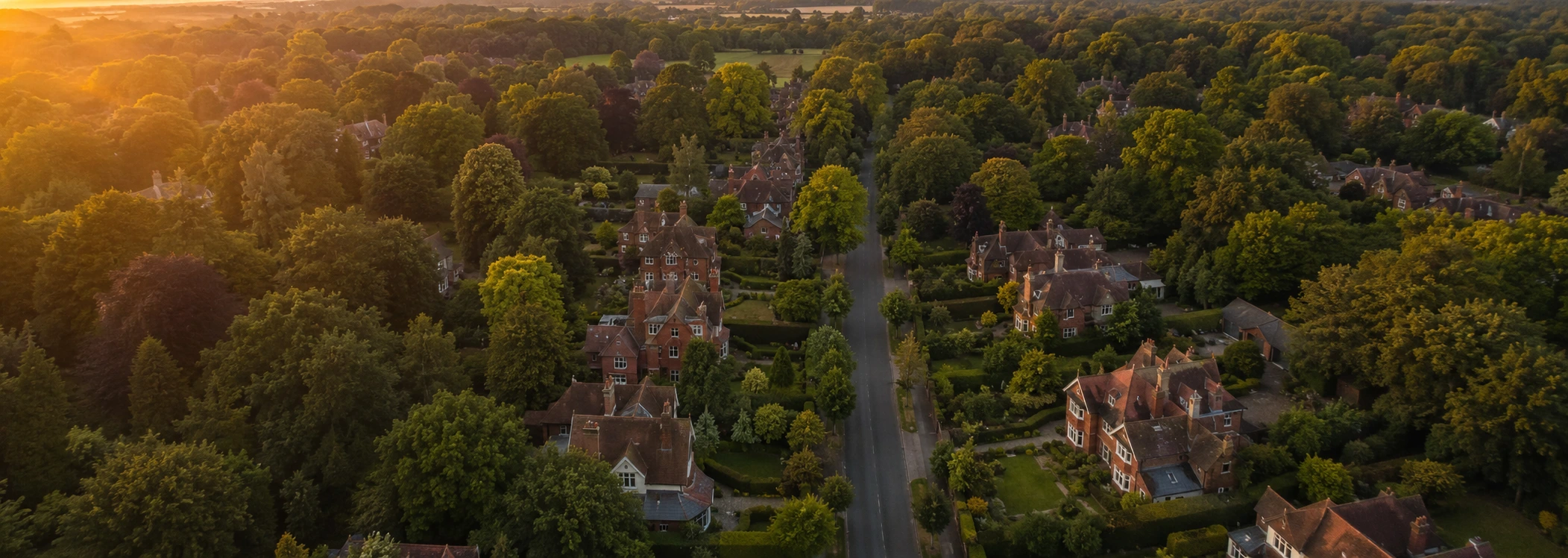
Ealing's W5 and W13 postcodes run from the prestigious Edwardian villas of Pitshanger Lane and Montpelier Road through to the Victorian terraces of West Ealing and the classic 1930s Metroland semis of Hanger Lane. Each area has its own subfloor character — pitch pine boards under carpet in the Pitshanger villas, deal boards on the Metroland semis, and the near-universal rear-extension concrete that complicates most of the 1930s stock. We survey every property at the free home visit, assess subfloor type and condition, and provide a fixed written price on the day covering supply, fitting, uplift and door trimming.
Every type below is supplied, fitted and guaranteed by our in-house team. Tap a floor type for the full guide — costs, fitting times and real examples from Ealing homes.
Comfortable carpet for the bedrooms of Hanger Lane’s 1930s Metroland semis, fitted over deal boards often well-preserved beneath the original linoleum found under the carpet.
Full Ealing guide →Waterproof LVT for kitchens in West Ealing Victorian terraces near the railway corridor, where elevated subfloor moisture is measured with a calibrated hygrometer before fitting.
Full Ealing guide →Budget-friendly wood-effect laminate for hallways and living rooms across W5 to W13, laid on a flat, ply-prepared base over standard deal-board suspended timber.
Full Ealing guide →Wide-board engineered oak for the 4–5 metre reception rooms of Pitshanger Lane and Montpelier Road Edwardian villas, laid over their high-quality pitch pine suspended timber.
Full Ealing guide →The Edwardian villas on Pitshanger Lane, Montpelier Road, Brunner Road and Corfton Road were built between 1900 and 1914 for the aspirational professional families who were drawn to Ealing by its then-reputation as the Queen of the Suburbs. These are detached and semi-detached properties — typically four bedrooms with generous gardens — built to a noticeably higher standard than contemporary terrace housing. Suspended timber throughout: pitch pine boards of 150mm width in reception rooms with room spans of 4–5 metres, deal boards in bedrooms, joists at 375mm centres in good original condition. Some properties retain original Minton-tiled entrance halls alongside the suspended timber. The result is that subfloors in the best-maintained Pitshanger Lane properties are among the finest we encounter in west London. Full ply preparation is always required before any hard floor product — the board widths and joist spans demand it — but the preparation is straightforward because the original construction was done properly.
The Victorian and Edwardian properties around Haven Green, The Mall, St Mary's Road and Mattock Lane were built between 1880 and 1910 for the growing population of commuters using the Great Western Railway into Paddington. Properties here are a mix of terraced houses and semi-detached with suspended timber throughout. The complication in this area is the commercial conversion history: properties near the Uxbridge Road and Ealing Broadway have in many cases had ground-floor rooms converted to retail or office use between the 1970s and 1990s and then returned to residential. Concrete has been introduced in these ground floors to create a level commercial surface — which means what appears to be a Victorian terraced house may have solid concrete at ground level and suspended timber only on upper floors. We always survey the full property before pricing and treat each zone — and each threshold between zones — as a separate line in the quote.
The 1930s semi-detached houses on Montague Road, Elthorne Avenue, Hanger Lane and Shakespeare Road were built following the expansion of the Central Line and bus services through west London. Standard Metroland construction: deal boards 100–110mm wide on suspended timber ground floors, joists at 400mm centres, built to a consistent if functional standard. Board condition in properties that haven't been heavily modified is generally good — original linoleum intact under carpet is a common find in this stock, which protects boards from nail damage and often means the subfloor is in better condition than expected. The near-universal complication is the rear kitchen extension, which has a solid concrete subfloor meeting the original suspended timber at the rear reception room wall. We survey both zones, price the preparation for each, and manage the height difference at the threshold precisely.
West Ealing — Uxbridge Road W13, Drayton Green Road, Lower Boston Road, Northcroft Road — offers a solid run of Victorian terraces built in the 1875–1900 period for the artisan and working families employed in the workshops and light industry that developed along the GWR main line. The suspended timber here is the period standard: deal boards 100–125mm wide, joists at 400mm centres. Properties closest to the Western Avenue and the railway corridor sometimes have elevated moisture readings in ground-floor subfloors from the combination of heavy traffic vibration and clay subsoil drainage limitations — we always measure with a calibrated hygrometer before specifying. Rear extensions are nearly universal and create the familiar mixed subfloor situation that we price and manage as a matter of course throughout West Ealing and the W13 postcode.
One visit covers everything: samples brought to your Ealing home, every room measured, and a price agreed before we leave. No deposit, no obligation.
The price we give you in Ealing already covers materials, underlay, fitting, door bars and taking the old floor away. It does not move afterwards.
For 12 months after fitting, any lifting, gapping or loose edges in your Ealing home are fixed free of charge — no call-out fee, no quibble.
Floors & Fix Fitting Team did an excellent job from start to finish. The team was professional, punctual, and paid great attention to detail throughout the installation. The flooring was fitted to a very high standard, and the finished result has completely transformed the space. They kept everything tidy, communicated clearly, and made sure every aspect of the job was completed perfectly. I would highly recommend Jon and the team to anyone looking for quality flooring work and reliable service.
★★★★★Great and reliable service provided by Floors And Fix. Highly recommended
★★★★★I contacted the team at floors and fix, they came for a visit, showed me products and I paid a deposit. Within 10 days they and came fitted my flooring. I would strongly recommend!
★★★★★Supply and fit, Got a decent price and fitted on short notice
★★★★★Great service from the team at floors and FiX- supplied and fitted my carpets and floors
Yes — we cover the full W5 and W13 postcode area including Ealing Broadway, Pitshanger Lane, Hanger Lane, West Ealing and all surrounding areas. No call-out charge and free home visits including evenings and weekends.
In most cases yes — Pitshanger Lane's Edwardian villas were built to a high standard and the suspended timber is typically in good original condition under carpet. We re-nail any movement, add ply and fit over the top. This is more cost-effective than concrete and preserves the original floor structure.
Mixed subfloor situations are very common in Ealing's 1930s semis. We survey both zones, price the preparation for each, and manage the height difference at the threshold between suspended timber and concrete. All preparation is included in the fixed price given at the home visit.
We can usually arrange a visit within 2–5 working days across W5–W13. Evening and weekend appointments available at no extra charge. No call-out charge anywhere in Ealing.
Yes. Uplift and disposal is included as standard on all fitting jobs in Ealing. No skips, no mess — all part of the fixed price. Call 07836 446951 to book.
We survey all three zones at the home visit. Where the parquet is bonded and level, we can use it as a base for engineered oak or LVT with a ply overlay; alternatively we lift it and start fresh. Transitions between zones — hallway to reception and hallway to kitchen — are managed with T-bar or flush threshold strips that we specify to suit the height difference between finished floor levels. All transition details are confirmed and priced at the home visit. We give you one fixed quote covering the full project.
Samples come to you in Ealing — we measure every room and price the full project on the same visit, with no deposit and no obligation.
Same-week visits available · enquire 24/7Last updated: June 2026